This star-studded image shows us a portion of Messier 11, an open star cluster in the southern constellation of Scutum (the Shield). Messier 11 is also known as the Wild Duck Cluster, as its brightest stars form a “V” shape that somewhat resembles a flock of ducks in flight. via NASA https://ift.tt/2CMbhhy
Friday, 29 March 2019
Disease outbreak news from the WHO: Middle East respiratory syndrome coronavirus (MERS-CoV) – The Kingdom of Saudi Arabia
From 1 through 28 February 2019, the National IHR Focal Point of Saudi Arabia reported 68 additional cases of Middle East respiratory syndrome coronavirus (MERS-CoV) infection, including 10 deaths. Of the 68 MERS cases reported in February, 19 cases occurred in cities other than Wadi Aldwasir.
This Disease Outbreak News update describes the 19 cases. Among these cases, fifteen were sporadic, and four were reported as part of two unrelated clusters. Cluster 1 involved two cases in Buridah city; and Cluster 2 involved two cases in Riyadh city. The link below provides details of the 19 reported cases.
Published on March 29, 2019
View on website
This Disease Outbreak News update describes the 19 cases. Among these cases, fifteen were sporadic, and four were reported as part of two unrelated clusters. Cluster 1 involved two cases in Buridah city; and Cluster 2 involved two cases in Riyadh city. The link below provides details of the 19 reported cases.
Published on March 29, 2019
View on website
Thursday, 28 March 2019
Disease outbreak news from the WHO: Ebola virus disease – Democratic Republic of the Congo
The ongoing Ebola virus disease (EVD) outbreak in the North Kivu and Ituri provinces saw a rise in the number of new cases this past week. At this time, response teams are facing daily challenges in ensuring timely and thorough identification and investigation of all cases amidst a backdrop of sporadic violence from armed groups and pockets of mistrust in some affected communities. Despite this, progress is being made in areas such as Mandima, Masereka and Vuhovi, where response teams are gradually able to access once again and acceptance by the community of proven interventions to break the chains of transmission is observed.
During the last 21 days (6 – 26 March), a total of 125 new cases were reported from 51 health areas within 12 of the 21 health zones affected to date; 38% of the 133 health areas affected to date (Figure 2). The majority of these cases were from remaining hotspot areas of Katwa (36), Butembo (14), and three emerging clusters in Mandima (19), Masereka (18) and Vuhovi (17), in addition to a limited number of cases in other areas (Table 1). All cases link back to chains of transmission in hotspot areas, with onward local transmission observed in a limited number of towns and villages within family/social networks or health centers where cases have visited prior to their detection and isolation.
Published on March 28, 2019
View on website
During the last 21 days (6 – 26 March), a total of 125 new cases were reported from 51 health areas within 12 of the 21 health zones affected to date; 38% of the 133 health areas affected to date (Figure 2). The majority of these cases were from remaining hotspot areas of Katwa (36), Butembo (14), and three emerging clusters in Mandima (19), Masereka (18) and Vuhovi (17), in addition to a limited number of cases in other areas (Table 1). All cases link back to chains of transmission in hotspot areas, with onward local transmission observed in a limited number of towns and villages within family/social networks or health centers where cases have visited prior to their detection and isolation.
Published on March 28, 2019
View on website
Hubble Watches Spun-Up Asteroid Coming Apart
A small asteroid was caught in the process of spinning so fast it’s throwing off material, according to new data from NASA’s Hubble Space Telescope and other observatories. via NASA https://ift.tt/2FDtGh5
Wednesday, 27 March 2019
Joan Stupik, Guidance and Control Engineer
When Joan Stupik was a child, her parents bought her a mini-planetarium that she could use to project the stars on her bedroom ceiling. via NASA https://ift.tt/2FyKdTB
Tuesday, 26 March 2019
Orion Launch Abort System Attitude Control Motor Hot-Fire Test
A static hot-fire test of the Orion spacecraft's Launch Abort System Attitude Control Motor to help qualify the motor for human spaceflight, to help ensure Orion is ready from liftoff to splashdown for missions to the Moon. via NASA https://ift.tt/2Wk4fYE
Monday, 25 March 2019
Nick Hague Completes First Spacewalk
NASA astronaut Nick Hague completed the first spacewalk of his career on Friday, March 22, 2019. He and fellow astronaut Anne McClain worked on a set of battery upgrades for six hours and 39 minutes, on the International Space Station’s starboard truss. via NASA https://ift.tt/2CG0DJf
Subscribe to:
Posts (Atom)
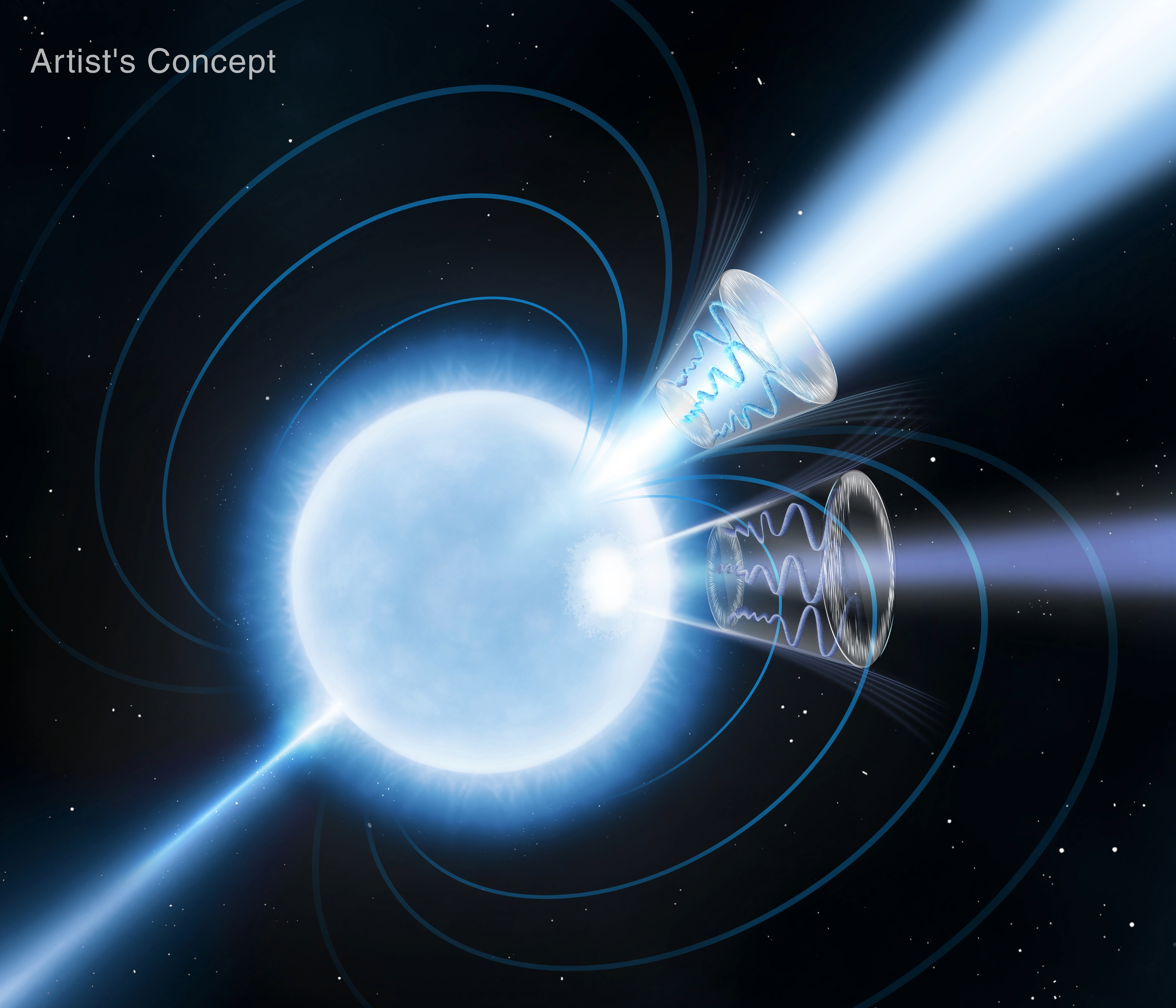
NASA's IXPE Studies Magnetar
A first of its kind measurement of a magnetar may have captured empty space behaving in a way physicists have predicted for 90 years, but ne...
-
An astronaut aboard the International Space Station took this oblique photograph of the Sulaiman Mountains in central Pakistan. The range r...
-
Astronaut Bruce McCandless II approaches his maximum distance from the Earth-orbiting Space Shuttle Challenger in this 70mm frame photograp...
-
NASA opened its newest wind tunnel, the Flight Dynamics Research Facility at NASA’s Langley Research Center in Hampton, Virginia, on Friday,...