From the International Space Station, NASA astronaut Christina Koch snapped and posted this image of the planet Venus at sunrise. via NASA https://go.nasa.gov/2MA8Mq1
Friday, 7 June 2019
Thursday, 6 June 2019
Disease outbreak news from the WHO: Ebola virus disease – Democratic Republic of the Congo
As the Ebola virus disease (EVD) outbreak surpasses the 2000 case mark, indicators over the past two weeks provide early signs of an easing of the transmission intensity. This follows a period of improved security and therefore access to communities, allowing response teams to operate more freely. A total of 88 confirmed cases were reported each week for the past two epidemiological weeks, down from a peak of 126 cases per week observed in April. Declines in the incidence of new cases have been most apparent in hotspots such as Katwa, Mandima and Beni health zones. Concurrently, improvements in the proportion of cases among contacts registered prior to onset (up from 30% three weeks ago to 55% last week), and a lower proportion of cases resulting from transmission within community health facilities (from 31% during the first week of April 2019 to 9% during the last week of May 2019), are encouraging. Nevertheless, both indicators are below where we would aim to be. The outbreak continues to be contained within 12 active health zones in North Kivu and Ituri provinces.
However, substantive rates of transmission continue within affected communities, and further waves of the outbreak may be expected. An increase in the incidence of new cases has been reported from Mabalako Health Zone in recent weeks, and high infection rates continue within Butembo metropolitan. Times between detecting, reporting and admission of cases at Ebola treatment/transit centres (ETCs) remains too long (median 6 days, interquartile range 4–9 days in the past 3 weeks), with about a third (34% in the past 3 weeks) of cases dying outside of ETCs. Collectively these indicators highlight that the risks associated with this outbreak remain very high.
Published on June 06, 2019
View on website
However, substantive rates of transmission continue within affected communities, and further waves of the outbreak may be expected. An increase in the incidence of new cases has been reported from Mabalako Health Zone in recent weeks, and high infection rates continue within Butembo metropolitan. Times between detecting, reporting and admission of cases at Ebola treatment/transit centres (ETCs) remains too long (median 6 days, interquartile range 4–9 days in the past 3 weeks), with about a third (34% in the past 3 weeks) of cases dying outside of ETCs. Collectively these indicators highlight that the risks associated with this outbreak remain very high.
Published on June 06, 2019
View on website
Forecasting D-Day
Without the sound advice of meteorologists and geologists working behind the scenes, one of the most consequential battles in human history could have gone quite differently. via NASA https://go.nasa.gov/319WXKl
Disease outbreak news from the WHO: Circulating vaccine-derived poliovirus type 2 – Cameroon
On 23 May 2019, WHO received notification through the Global Polio Laboratory Network (GPLN) of the detection of circulating vaccine-derived poliovirus type 2 (cVDPV2) from an environmental sample collected on 20 April 2019 in a hospital in Northern Cameroon which borders Borno state in Nigeria and Chad.
Published on June 06, 2019
View on website
Published on June 06, 2019
View on website
Wednesday, 5 June 2019
Chandra Detects a Coronal Mass Ejection From Another Star
The Chandra X-Ray Observatory detects a coronal mass ejection from a star other than the Sun for the first time. via NASA https://go.nasa.gov/2Kur614
Tuesday, 4 June 2019
Orion’s AA-2 Flight Test Article Stacks Up!
Orion’s Ascent Abort-2 flight test vehicle was rolled out from Kennedy Space Center’s Launch Abort System Facility to Space Launch Complex 46 at Cape Canaveral Air Force Station for its July 2 launch. via NASA https://go.nasa.gov/2Xs9czE
Monday, 3 June 2019
NASA Selects First Commercial Moon Landing Services for Artemis Program
NASA selected three commercial Moon landing service providers that will deliver science and technology payloads under Commercial Lunar Payload Services (CLPS) as part of the Artemis program. via NASA https://go.nasa.gov/2Xnvxyl
Subscribe to:
Posts (Atom)
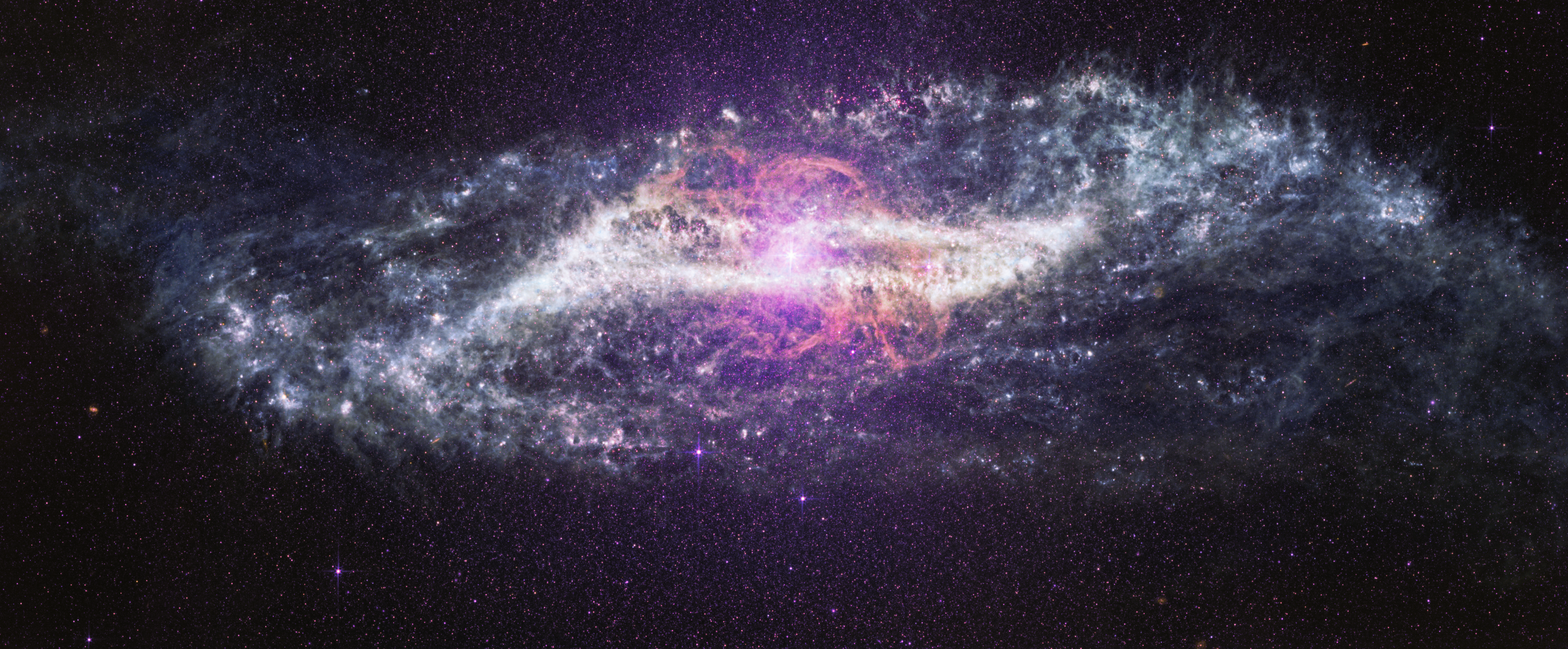
Starburst Galaxy Centaurus A
NASA’s James Webb Space Telescope’s Mid-Infrared Instrument (MIRI) reveals the nearby galaxy Centaurus A, exposing the dusty structures and ...
-
An astronaut aboard the International Space Station took this oblique photograph of the Sulaiman Mountains in central Pakistan. The range r...
-
Astronaut Bruce McCandless II approaches his maximum distance from the Earth-orbiting Space Shuttle Challenger in this 70mm frame photograp...
-
This image of Jupiter’s iconic Great Red Spot and surrounding turbulent zones was captured by NASA’s Juno spacecraft. The color-enhanced im...