Friday, 12 December 2025

The Calabash clash


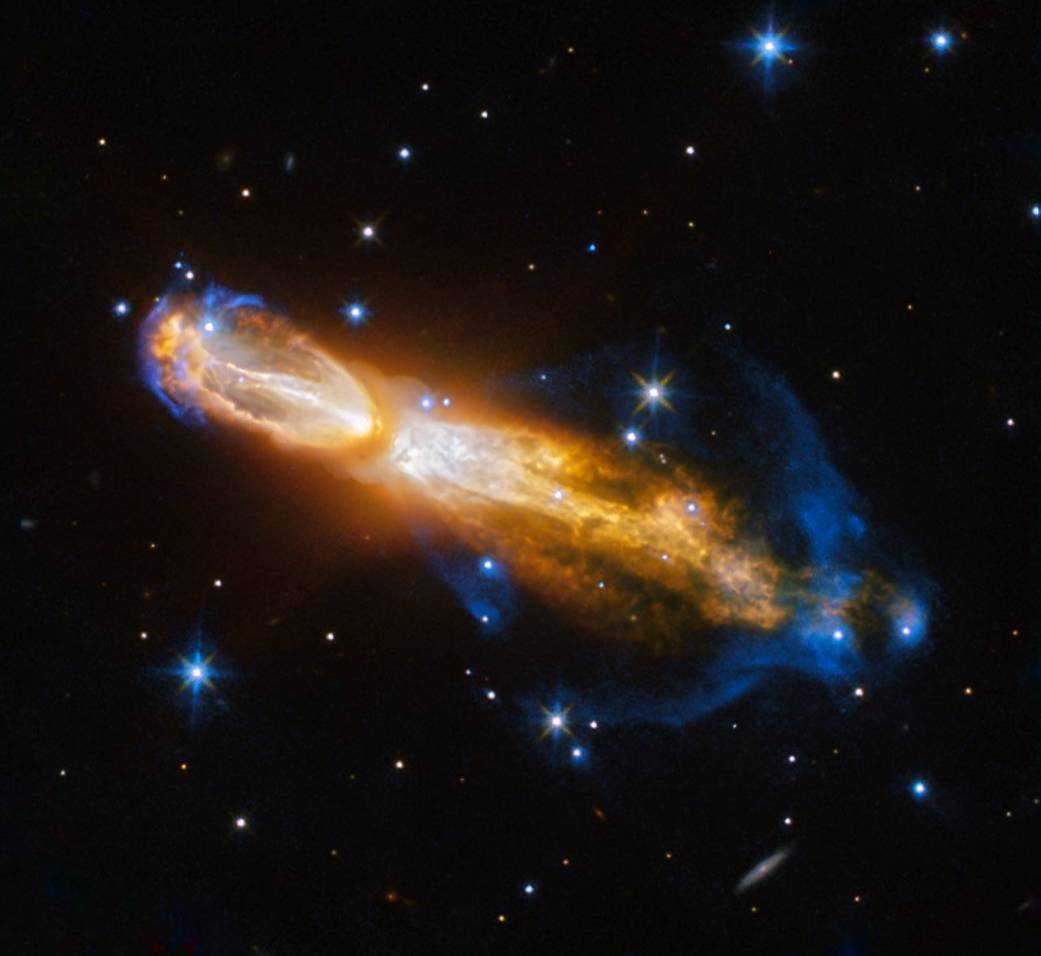
The Calabash Nebula, pictured here — which has the technical name OH 231.8+04.2 — is a spectacular example of the death of a low-mass star like the Sun. This image taken by the NASA/ESA Hubble Space Telescope shows the star going through a rapid transformation from a red giant to a planetary nebula, during which it blows its outer layers of gas and dust out into the surrounding space. The recently ejected material is spat out in opposite directions with immense speed — the gas shown in yellow is moving close to a million kilometres an hour. Astronomers rarely capture a star in this phase of its evolution because it occurs within the blink of an eye — in astronomical terms. Over the next thousand years the nebula is expected to evolve into a fully fledged planetary nebula. The nebula is also known as the Rotten Egg Nebula because it contains a lot of sulphur, an element that, when combined with other elements, smells like a rotten egg — but luckily, it resides over 5000 light-years away in the constellation of Puppis (The Poop deck). via NASA https://ift.tt/2H91pjV

Thursday, 11 December 2025

Stellar Jet


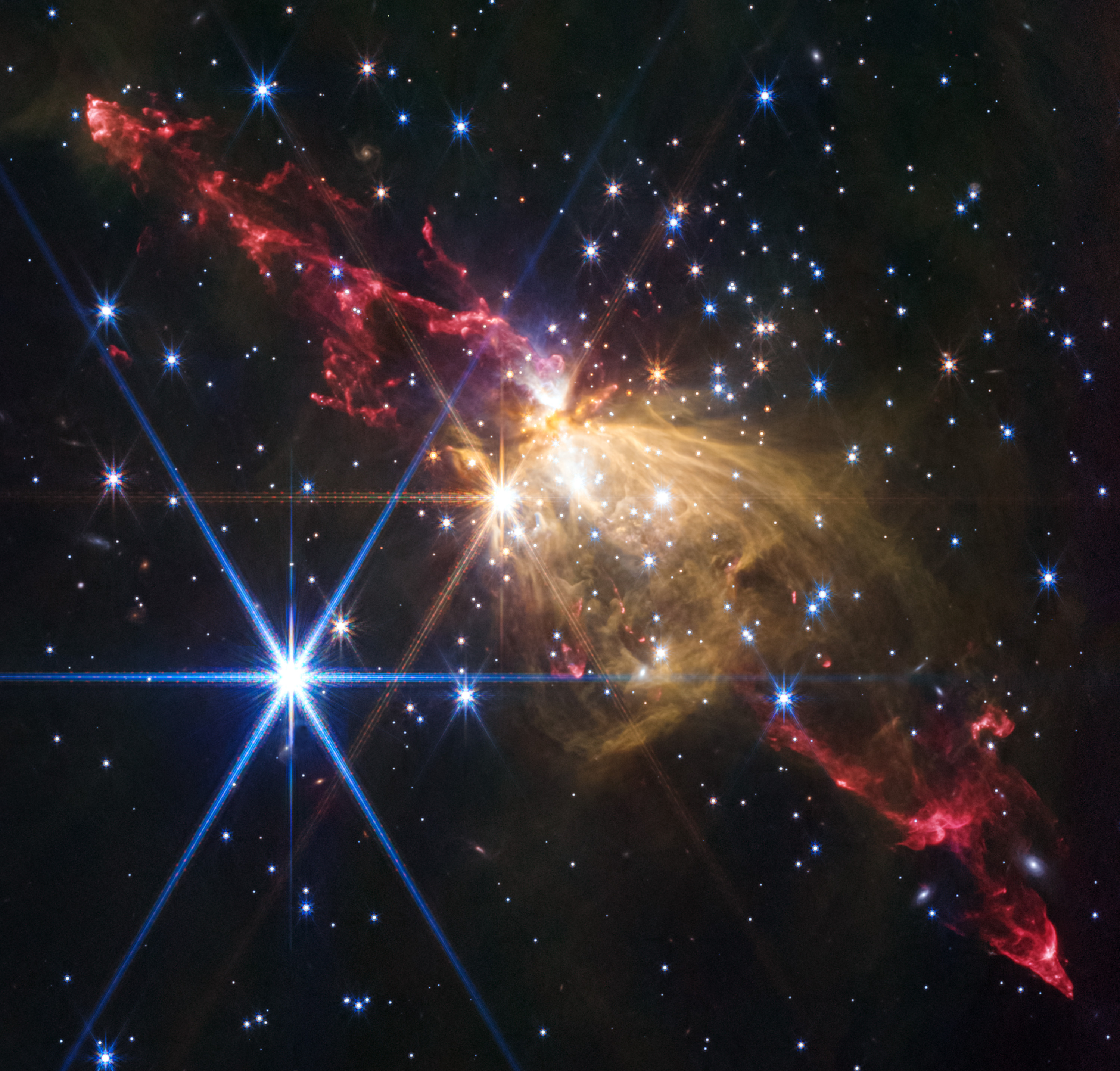
Webb’s image of the enormous stellar jet in Sh2-284 provides evidence that protostellar jets scale with the mass of their parent stars—the more massive the stellar engine driving the plasma, the larger the resulting jet. via NASA https://ift.tt/W2ETYHI

Wednesday, 10 December 2025

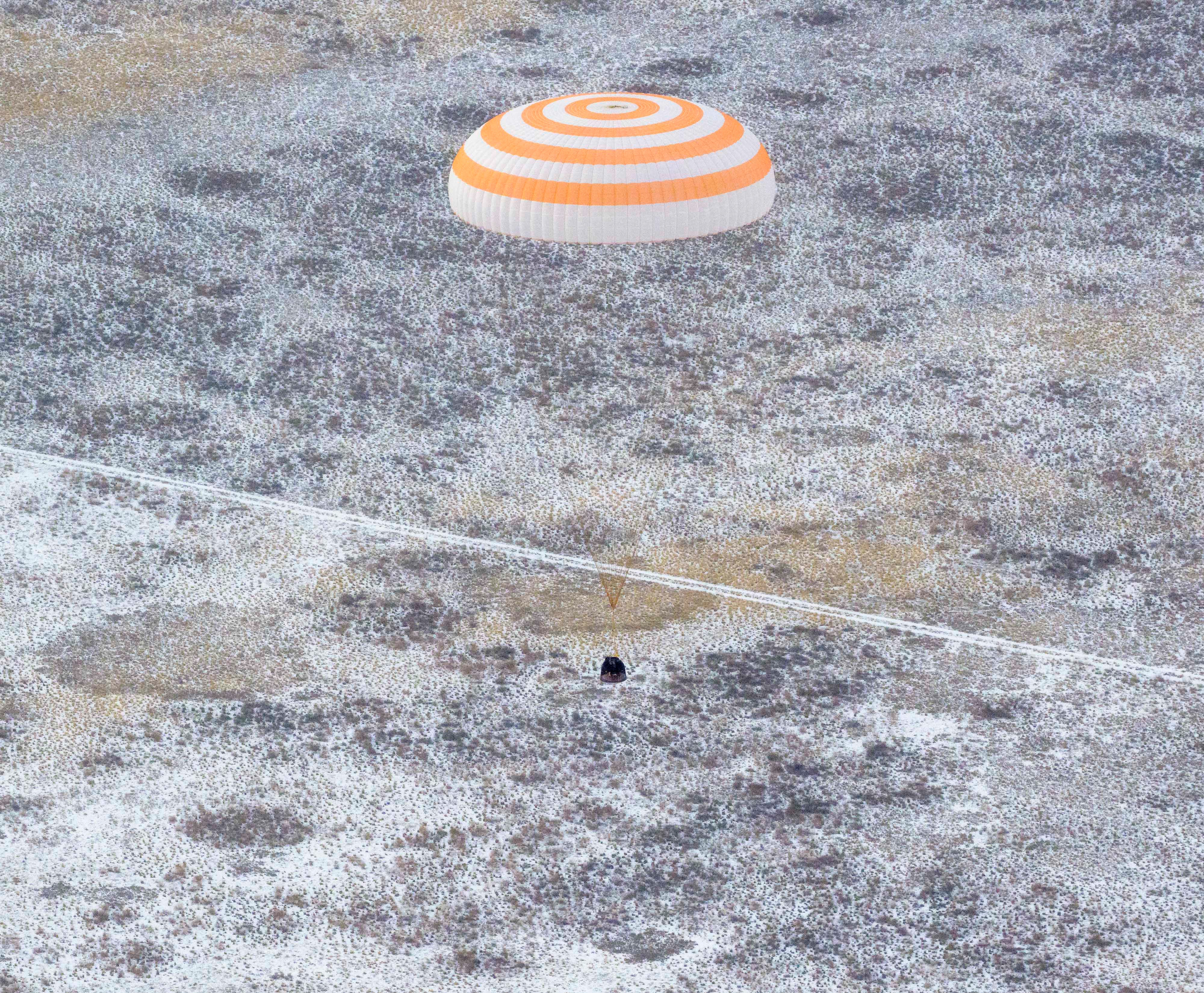
NASA Astronaut Jonny Kim Returns to Earth


The Soyuz MS-27 spacecraft is seen as it lands in a remote area near the town of Zhezkazgan, Kazakhstan with Expedition 73 NASA astronaut Jonny Kim, and Roscosmos cosmonauts Sergey Ryzhikov and Alexey Zubritsky aboard, Tuesday, Dec. 9, 2025. via NASA https://ift.tt/nMQj96T

Tuesday, 9 December 2025

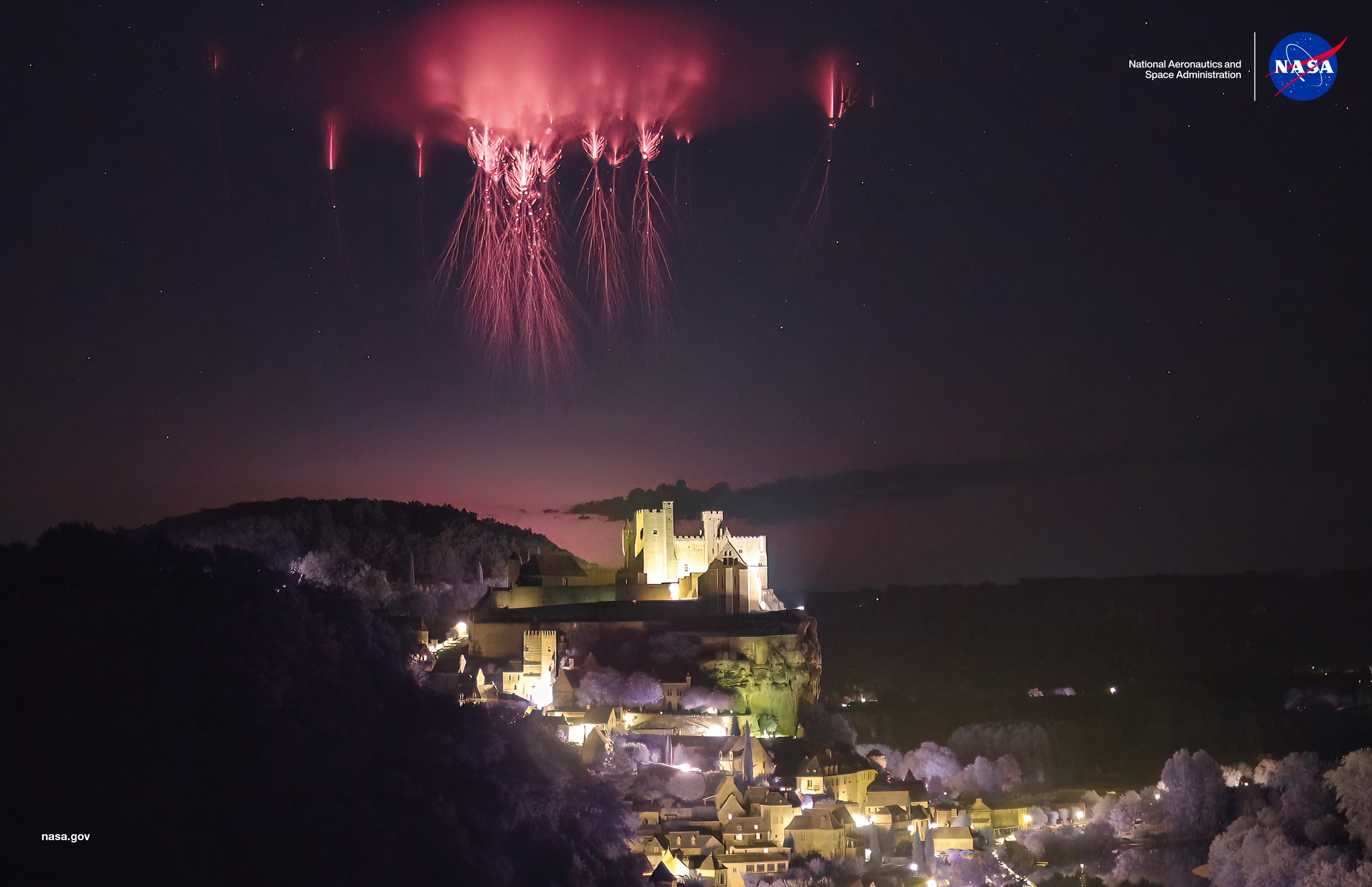
Sprites Over Château de Beynac


A flash of lightning, and then—something else. High above a storm, a crimson figure blinks in and out of existence. If you see it, you are a lucky witness of a sprite, one of the least-understood electrical phenomena in Earth’s upper atmosphere. via NASA https://ift.tt/a0b4K5O

Monday, 8 December 2025

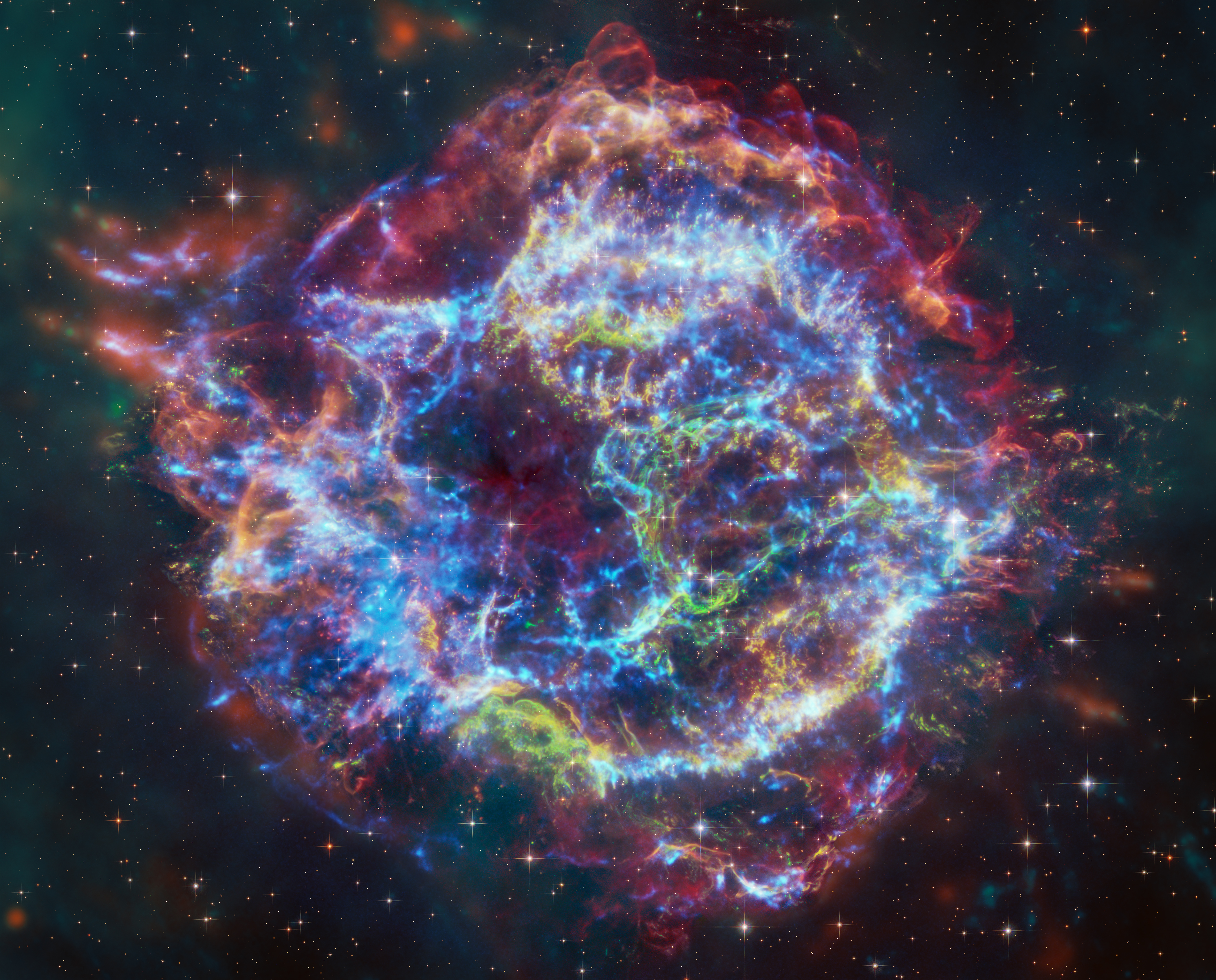
XRISM Finds Chlorine, Potassium in Cas A


This composite image of the Cassiopeia A (or Cas A) supernova remnant, released Jan. 8, 2024, contains X-rays from Chandra (blue), infrared data from Webb (red, green, blue), and optical data from Hubble (red and white). A study by the XRISM (X-ray Imaging and Spectroscopy Mission) spacecraft has made the first-ever X-ray detections of chlorine and potassium in the wreckage. via NASA https://ift.tt/peEC5Dh

Friday, 5 December 2025

Testing Drones for Mars in the Mojave Desert


Researchers from NASA's Jet Propulsion Laboratory in Southern California monitor a research drone in the Dumont Dunes area of the Mojave Desert in September 2025 as part of a test campaign to develop navigation software to guide future rotorcraft on Mars. via NASA https://ift.tt/1xIrAQk

Thursday, 4 December 2025

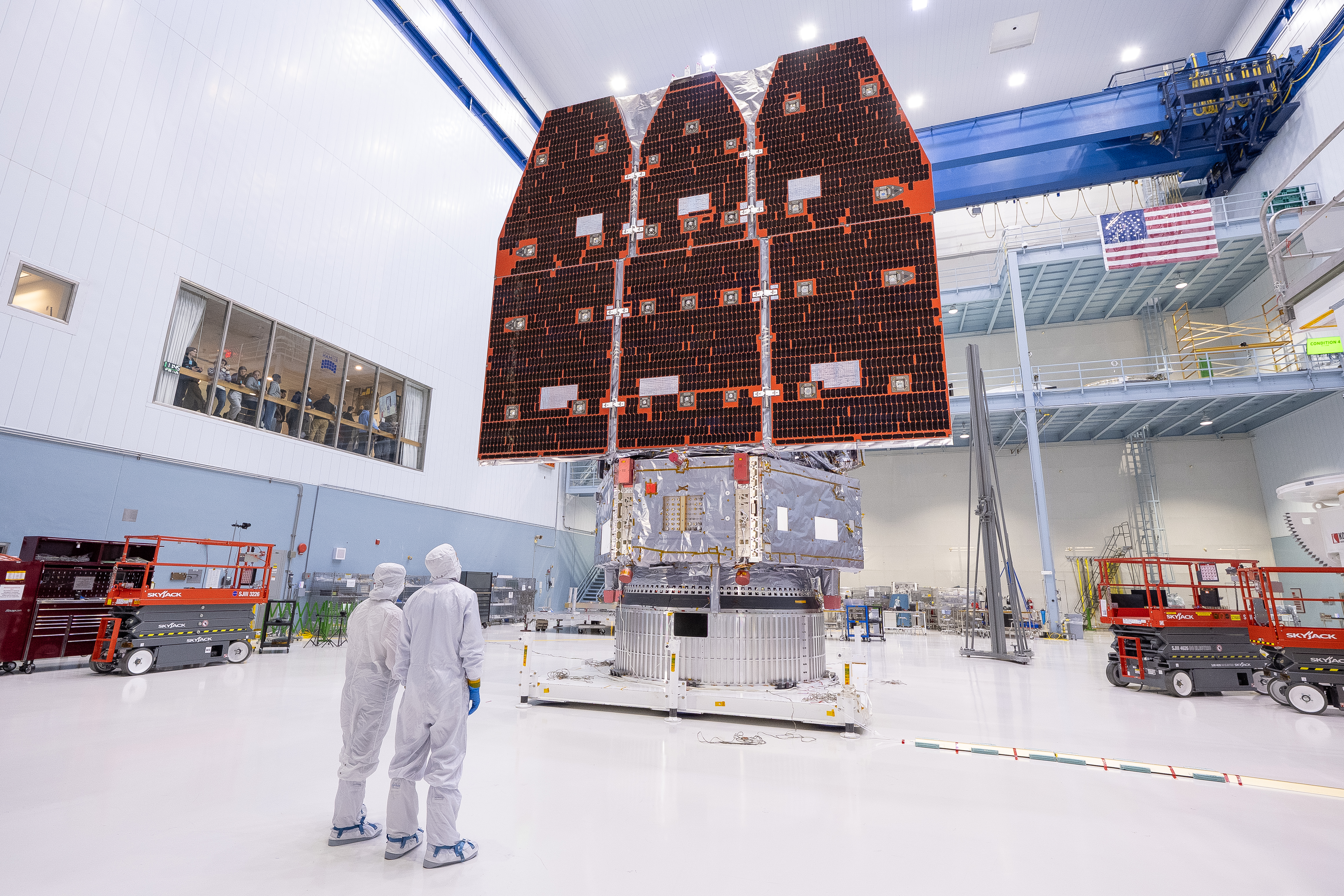
NASA’s Nancy Grace Roman Space Telescope Completed


Over the course of several hours, technicians meticulously connected the inner and outer segments of NASA’s Nancy Grace Roman Space Telescope. via NASA https://ift.tt/EDd1IWm

The Calabash clash

The Calabash Nebula, pictured here — which has the technical name OH 231.8+04.2 — is a spectacular example of the death of a low-mass star ...